Monday, December 2, 2019

Types of Christmas Trees

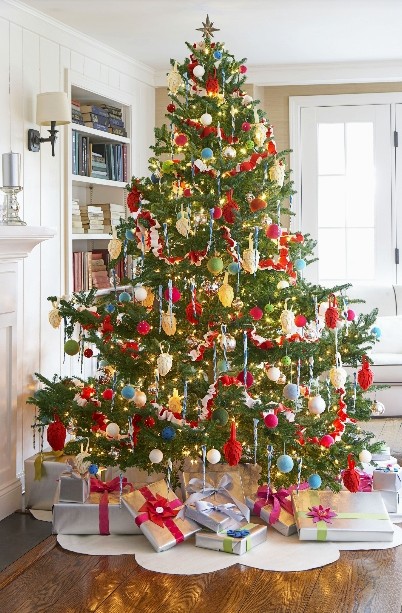
Types of Christmas Trees


  1. Balsam Fir, Fraser Fir, Canaan Fir 
    (Abies balsamea, Abies fraseri,
     Abies balsamea var. phanerolepis)
Best kind of Christmas tree! Best needle retention, 
very soft needles, holds older needles for up to 7 years for a more full look. 
(Zones 4-7 for Fraser and Canaan. Zones: 3-5 for Balsam) 
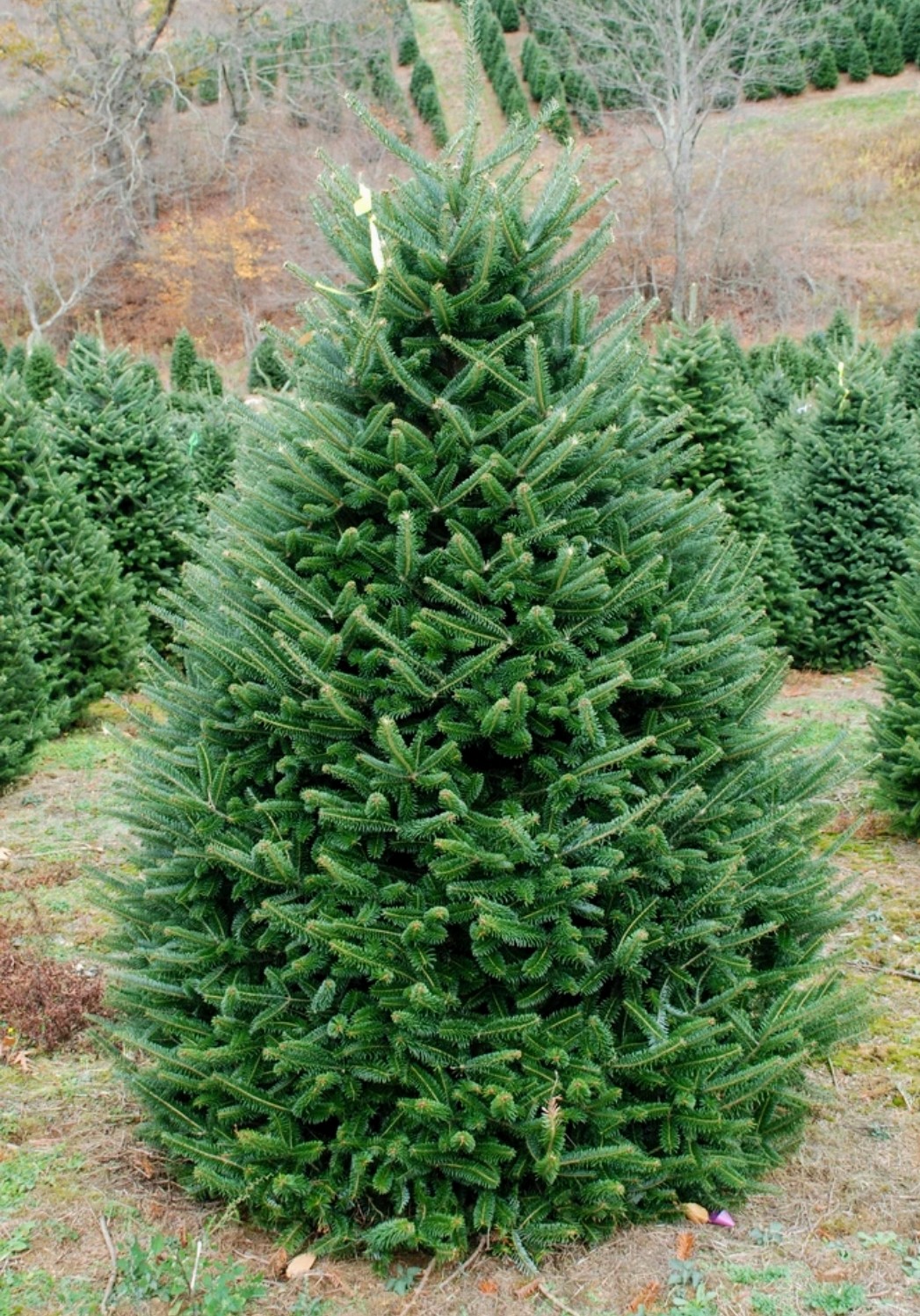

  1. Douglas Fir (Pseudotsuga menziesii)
Very popular Christmas tree! Excellent needle retention,
 longer needles resembles more of a Pine, but are soft to the touch.
 (Zones 4-6)


  1. Black Hills Spruce (Picea glauca 'Densata')
Great needle retention! Adds a Pine feel to the home! Sharp needles, 
use caution when handling. (Zones 2-7)
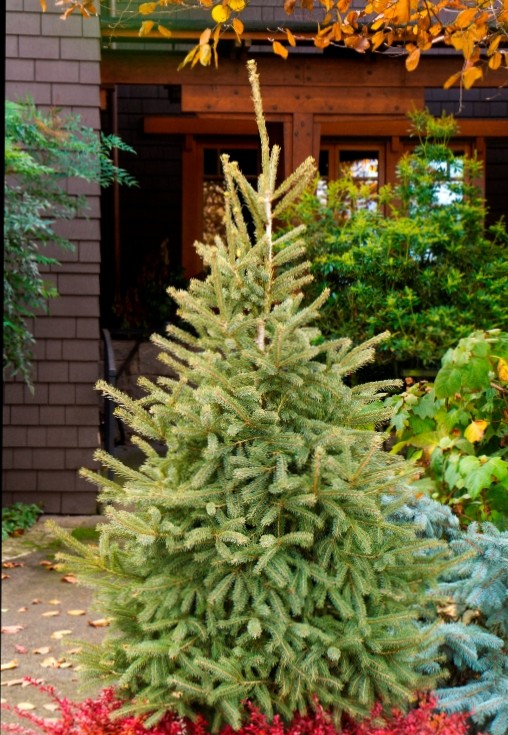

  1. Leyland Cypress (Cupressus × leylandii)
Soft feathery type foliage. Excellent needle retention. 
Mostly grown in the deep South. (Zones 5-9)


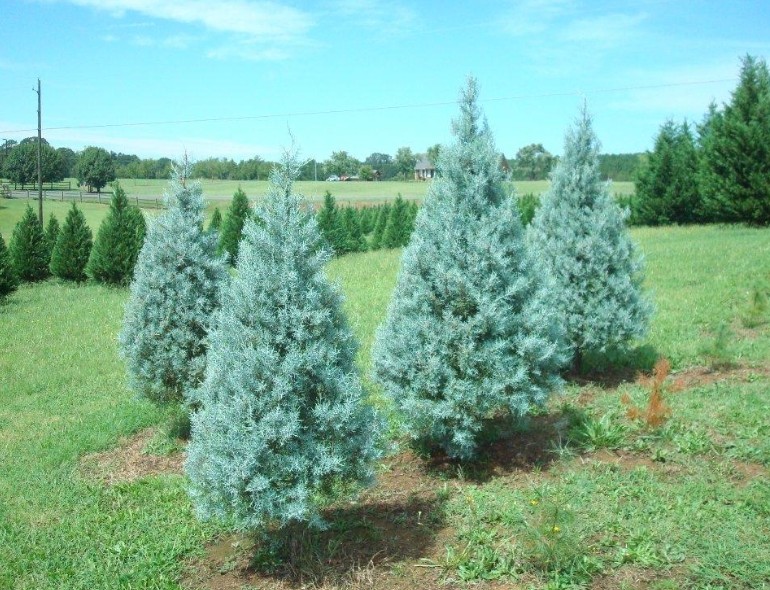
  1. Arizona Cypress (Cupressus arizonica)
     (Includes: Blue Ice, and Carolina Sapphire)
Blue snowy color adds a wintry feel to the home! 
Excellent needle retention! Very soft to the touch. 
Mostly grown in the deep South. (Zones 6-9)

  1. Sand Pine (Pinus clausa)
This Subtropical Pine is a Florida native and adds a real Christmas Feel!
 Good needle retention. Grown exclusively in the deep South. (Zones 8-10)


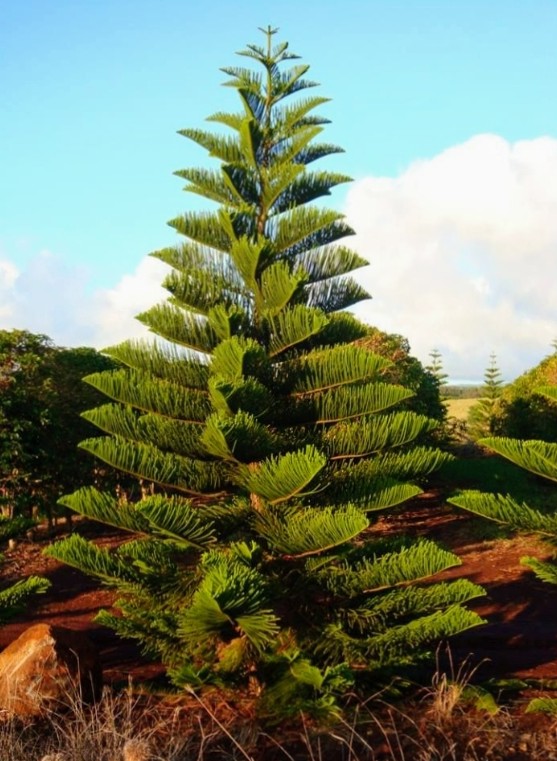
  1. Norfolk Island Pine (Araucaria heterophylla)
This is a true tropical Pine. Although not a true Pine, a conifer nonetheless.
 Grown only in frost free regions
 (South Florida, SoCal, and Hawaii to name a few places)
 Excellent needle retention. (Zones 10+)

  1. Concolor Fir (Abies concolor)
Excellent Needle retention! When crushed needles and branches have a citrusy smell.
 Long soft needles to the touch. (Zones: 3-7)


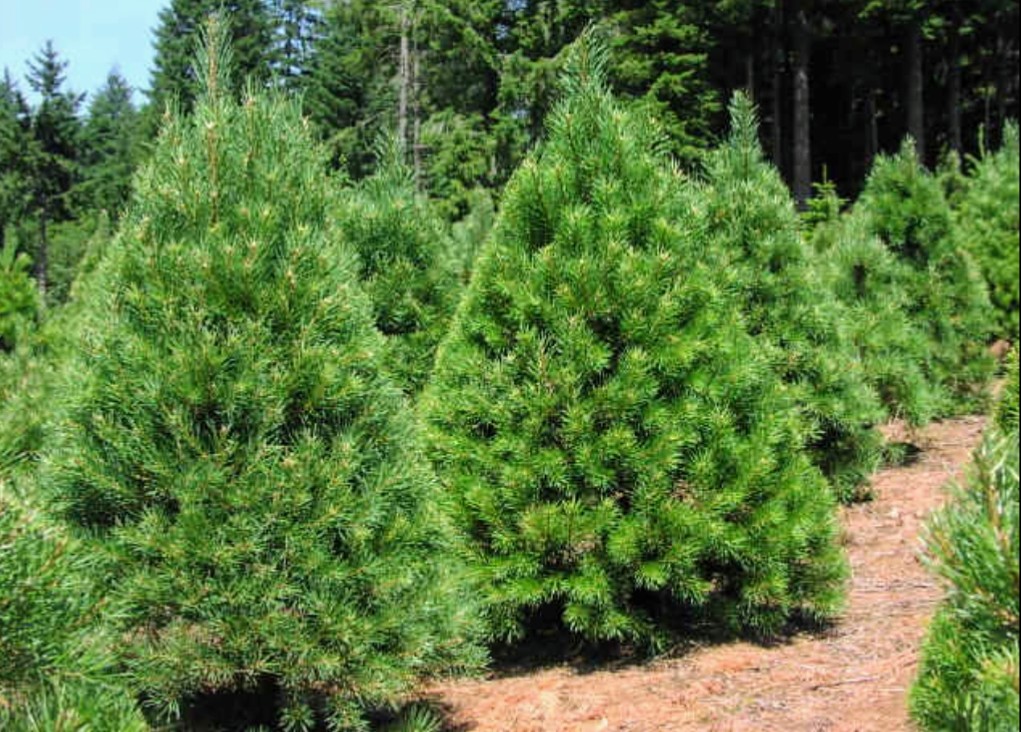
  1. Scotch Pine (Pinus sylvestris)
Best Pine tree as a Christmas tree! Excellent Needle retention!
 Strong Pine smell to spread through your home for the holidays!
 Only somewhat prickly. (Zones: 3-7)

  1. Noble Fir (Abies procera)
Very similar to Balsam (Fraser and Canaan) Fir, 
but has upright curved needles that add a compact look, 
this makes Noble Fir more desirable for the holidays! 
Excellent needle retention!  (Zones: 5-6)


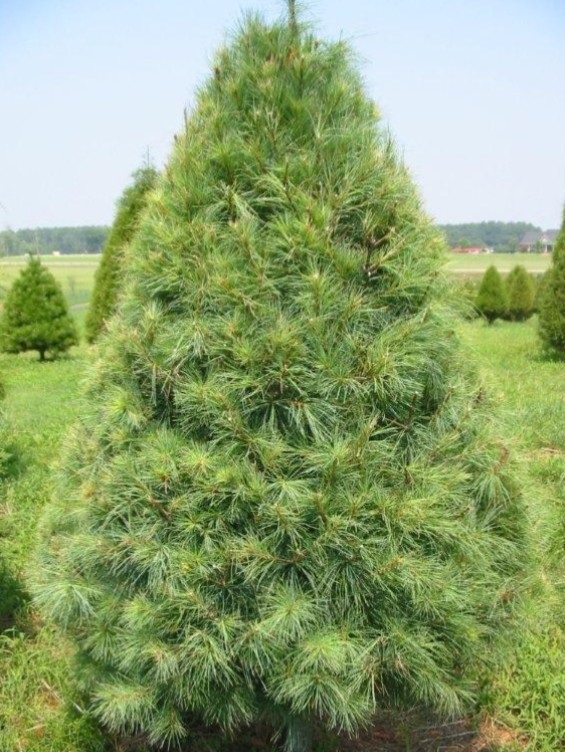
  1.  White Pine (Pinus strobus)
Needles are the softest of any Pine. 
Long graceful feathery needles adds Christmas cheer to the home!
 Good needle retention. (Zones: 3-8)

  1. Eastern Red Cedar (Juniperus virginiana)
Native to most of the Eastern US, 
adds a wonderful smell to fill the home for the Holidays! 
Excellent needle retention! While still grown up North, 
it is much more common in the Deep South as a Christmas tree. (Zones: 3-9)

Sunday, December 1, 2019

Steeds Japanese Holly

Steeds Japanese Holly
Ilex crenata 'Steeds'
Steeds Japanese Holly is more cold hardy than the regular species through zone 5.
 Evergreen Boxwood appearance adds ornamental interest to the landscape. 
Large size makes a perfect focal point specimen, or many as a screen!

Hardiness: USDA Zones: 5-9

Mature Size: 8'-10' tall by 4'-5' wide

Light: Full Sun-Part Shade 
(Tolerant of full shade but becomes leggy and less dense overtime)

Water: Medium
Performs best in moist well draining soils. Good drought tolerance once established.

Soils: Prefers acidic soils. Tolerates neutral to slightly alkaline soils. 
If soil is high alkaline add HollyTone or acidic fertilizer to lower pH level.

Deciduous/Evergreen: Evergreen

Fox Valley River Birch


Fox Valley River Birch
Betula nigra 'Little King'
Fox Valley is a dwarf River Birch. Stays compact for tight spaces,
 yet still has that wonderful cinnamon white peeling bark! 
More tolerant to heat than the regular species. 

Hardiness: USDA Zones 4-9

Mature Size: 10'-12' tall and wide

Light: Full Sun

Water: Medium-Wet
Performs best in moist soils. Tolerant of minor drought, but suffers in consistently dry soils. 

Soils: Prefers acidic soils. Tolerates neutral to slightly alkaline soils. 
If soil is high alkaline add HollyTone or acidic fertilizer to lower pH level.
 Prefers moist or wet soils.

Deciduous/Evergreen: Deciduous

Sky Pencil Holly


Sky Pencil Holly
Ilex crenata 'Sky Pencil'
The Sky Pencil Holly is the perfect columnar broadleaf evergreen! 
Perfect for tight spaces, or right up against a foundation.
 It's perfect in planters as well!

Hardiness: USDA Zones 6-8 
(Protected locations in Zone 5)

Mature Size: 8'-10' tall by 1'-2' wide

Light: Full sun-Part Shade 
(Tolerant of shady sites, but becomes leggy and less dense overtime)

Water: Medium
Not drought tolerant when young, moderate drought tolerance once established

Soils: Prefers acidic soils 
Grows in most soils, but performs best in loamy well draining soil.
 It is best to apply HollyTone or acidic fertilizer if soil is alkaline.

Deciduous/Evergreen: Evergreen

Wednesday, November 13, 2019

How Plants are Made and Grown


If you aren't a botanist or a landscaper (many landscapers don't even know) then you probably do not know how many of the plants that are in commerce come into existence and how they are propagated. In this post I will try to sum up as much as I can so you have a better understanding, appreciation, and to try for your self of plant growing! The growers of the many beautiful and exotic plants that are out there don't just exist by planting a few seeds just picked off a tree. There are processes, and lots of time taken to have these plants to sell.


1. CULTIVAR VS VARIETY

Many people and professional businesses use cultivar and variety as the same. This is not true, in the plant world they are two different words with two different meanings. A cultivar is a genetic mutation happened upon or selected for a desired trait. It can only be propagated by rooting cuttings or grafting onto the rootstock of another plant. It will not come true from seed. The resulting plant will not have that desired trait as it can not be Inherited, it must be cloned as a form of propagation. That's right! Cultivars of the same name are genetically identical!
A variety on the other hand also has a genetic trait (or traits) that is not in the regular species that is desired for landscaping/gardening. What makes a variety different than a cultivar is that a variety can be propagated from seed. It can grow in the wild and still keep that genetic mutation.

EXAMPLE OF A VARIETY

1. Whitebud Redbud tree (Botanical Name: Cercis canadensis 'alba')

Whitebud Redbud is extremely rare in the wild, but the fact that it is capable of reproducing from seed and keeping those white instead of red flowers means it is a variety and not a cultivar.

EXAMPLES OF CULTIVARS

1. Amber Gold Arborvitae
2. Slender Silhouette Sweetgum

I follow plant peeps on Instagram, and one nursery I follow travels all around looking for plants with abnormalities to propagate. They came across what is believed to be a Green Giant Arborvitae which is a cultivar of a hybrid between the Japanese Arborvitae and the Western Arborvitae. They found golden branches growing on a tree next to normal green trees. Since this is a rare genetic mutation, it can not be inherited, and must be propagated by means of cloning (grafting, and rooting cuttings). They took the cuttings from that tree and are rooting them in soil with a rooting hormone to get them to root. Then if they choose, they can name this new cultivar. They can get a patent for it and sell it to other wholesalers to sell to nurseries which sells to the customer to grow in their landscape. It is a good way to get rich fast!


HYBRIDS:

Hybrids are a cross between two plants that are within the same genus or are gentically similar enough to cross if not in the same genus. An example of hybrids not in the same genus is how a mule is made. It is a hybrid between a horse and a donkey. They are two different "genus" but are gentically similar enough to cross. The pollen from one species pollinates the flower of another. The seeds will germinate to be a hybrid between the two species. Growers can even develop Cultivars of hybrids. An example is the 'Armstrong Gold' Freeman's Maple. The Freeman's Maple is a hybrid between Red Maple (Acer rubrum) and Silver Maple (Acer saccharinum). 'Armstrong Gold' was selected for its extremely columnar growth and golden orange leaves instead of Red leaves which forms on regular Freeman's Maples. It makes a perfect street tree because it's branches don't spread and hit people, cars, and buildings.


You can also have Cultivars of Cultivars. A good example is Amber Gold Arborvitae. Amber Gold is a golden sport of the Emerald Green Arborvitae. The Emerald Green Arborvitae is a dwarf narrow cultivar of the Eastern Arborvitae (Thuja occidentalis) Which is a tree that naturally grows 30'-75' tall and wide. It is a coniferous evergreen.


I hope this post helped you all understand where and how plants you love come to be!

Happy Growing! 🌿


FIRST 4 IMAGES ARE OF THE NURSERY ON INSTAGRAM I MENTIONED


NEXT 3 PICTURES ARE OF AMBER GOLD ARBORVITAE, WHITEBUD REDBUD TREE, AND SLENDER SILHOUETTE SWEETGUM TREE


Wednesday, November 6, 2019

Adam's Needle Yucca

Adam’s Needle Yucca
Yucca filamentosa


Adam’s Needle Yucca is one of the most cold hardy Yuccas there is! 
Suited all the way to USDA Zone 4, adding tropical lush to your northern climate!
 Yucca is an evergreen related to Aloe and Palm, it is extremely drought tolerant.


Hardiness: USDA Zones 4-10

Mature Size: 4’-6’ tall by 3’-4’ wide 
(flower stalks may reach 10’ tall, and spreads aggressively by rhizomes)

Light: Full Sun-Part shade
(Performs best in full sun)

Water: Dry-Medium 
(Excellent drought tolerance, perfect for xeriscapes. 
Very tolerant of clay soils, so long as adequate drainage is available) 

Soils: Not particular with specific pH level. 
Grows in most soils, including poor soils. Not tolerant of wet soils

Deciduous/Evergreen: Evergreen

Grey Owl Juniper

Grey Owl Juniper
Juniperus virginiana 'Grey Owl'
Grey Owl is a dwarf low growing cultivar of the Indiana Native Eastern Red Cedar
 (actually a Juniper). Very drought tolerant. Makes a perfect ground cover
 or low growing hedge. Prized for its blue color!

Hardiness: USDA Zones 4-9 
(zone 3 in protected locations)

Mature Size: 3' tall by 6' wide

Light: Full Sun

Water: Dry-Medium 
Excellent drought tolerance once established. 
Tolerant of some moist sites, but does not tolerate any wet sites.

Soils: Not particular with specific pH level. Grows in poor soils.

Deciduous/Evergreen: Evergreen

Princeton American Elm


Princeton American Elm
Ulmus Americana 'Princeton'

American Elm native to all of Indiana and virtually half
 of all the Eastern US. American Elm was a dominant 
and majestic tree now virtually extinct in the wild 
due to Dutch Elm Disease. Princeton has high resistance
 to the disease. Upright growth doesn't spread until
 it is high and avoids branching against 
buildings, people, and cars. Perfect street tree!

Hardiness: USDA Zones 3-9

Mature Size: 50'-70' tall by 30'-50' wide

Light: Full Sun-Part shade

Water: Medium
Good drought tolerance once established. 
Good tolerance to poor sites with moderately wet soils or dry soils, 
does not perform well in overly wet or dry soils. 

Soils: Not particular with specific pH level. 
Grows in poor soils, just not overly wet or dry.

Deciduous/Evergreen: Deciduous

Tiger Eyes Sumac


Tiger Eyes Sumac
Rhus typhina 'Tigereye Bailtiger'
Tiger Eyes Sumac is a very unique plant, adding contrast to other
"plain" plants. Golden cutleaf foliage on crooked stems adds
 wonder to the garden! This dwarf plant is perfect near a foundation.
Hardiness: USDA Zones 4-8 
(zone 3 in protected locations)

Mature Size: 8'-10' tall and wide

Light: Full Sun

Water: Dry-Moist
Excellent drought tolerance once established. 
Tolerant of moist soils, but not wet.

Soils: Not particular on specific pH level.
 Grows in most soils. Tolerant of poor soils.

Deciduous/Evergreen: Deciduous

Loblolly Pine The New Northern Pine

Loblolly Pine Pinus taeda The Loblolly Pine is widely known as the most common Pine tree in the South-Eastern United States. However, it is ...