Sunday, May 12, 2019

Best Golden Evergreens


1. Golden Mop Cypress
USDA Zones: 4-8
Moisture: Medium (tolerates drought)

2. 'Forever Goldy' Arborvitae
The most golden Arborviate I know of.
USDA Zones: 4-7
Moisture: Medium (tolerates drought)

3. 'Gold Rider' Leyland Cypress
USDA Zones: 5-10
Moisture: Medium

4. 'Sea of Gold' Juniper
USDA Zones: 3-8
Moisture: Dry-medium

5. 'Louie' White Pine
USDA Zones: 3-8
Moisture: Dry- medium

6. 'Gold Cone' Juniper
USDA Zones: 2-7
Moisture: Dry


'Edith Bogue' Southern Magnolia Update: 5/12/19

My 'Edith Bogue' Southern Magnolia survived the winter just fine with winter burn. The tree is shedding all the dead leaves, and every single branch is alive and sending up new shoots. Reached a temp of -13°F with winds over 30 mph back on January 31. So excited to see it fill back in! 😁

Indianapolis, IN
USDA Zone: 5b


NatureMan


Circles show where new bud grow


Monday, May 6, 2019

Shade Perennials

Perennials that grow in the shade can be hard to find, many gorgeous perennials grow in full sun. There are beautiful shade loving perennials you can buy! Here are the top 10 best shade loving perennials.

1. Variegated Solomon's Seal (Polygonatum odoratum var. pluriflorum 'Variegatum')

Hardy in USDA Zones: 3-8. Moisture: medium to wet soils.

2. Coral Bells (Heuchera spp.)

Hardy in USDA Zones: 4-9 Moisture: medium to moist

3. Hostas (Hosta spp.)

Hardy in USDA Zones: 3-9 Moisture: Medium

4. Japanese Forest Grass (Hakonechloa macra)

Hardy in USDA Zones: 5-9 Mositure: Medium to moist

5. Bleeding Heart (Dicentra spectabilis)

Hardy in USDA Zones: 3-9 Moisture: Medium.

6. Pachysandra (Pachysandra terminalis)

Hardy in USDA Zones: 3-9 Moisture: Dry to moist

7. English Ivy (Hedera helix)

Hardy in USDA Zones: 5-11 Moisture: Medium to moist (tolerates drought once established)

8. Vinca Myrtle (Vinca minor)

Hardy in USDA Zones: 4-8 Moisture: dry to medium

9. Columbine (Aquilegia spp.)

Hardy in USDA Zones: (3)4-8 Moisture: medium

10.Virginia Bluebells (Mertensia virginica)

Hardy in USDA Zones: 3-8 Moisture: medium


Thursday, March 28, 2019

Growing Hens and Chicks (Sempervivum)


Hens and Chicks also called Houseleeks are cold hardy perennial broadleaf evergreen succulents. Hens and Chicks are extremely cold hardy to USDA Zone 3 (-40°F). They may suffer at those temps, but should bounce back. They are guaranteed hardy to Zone 4 (-30°F). Since these guys are succulents, they do not like wet soils. They need full sun, and require excellent drainage. If your soil is all clay, make sure the soil is away from standing water, like on top of a mound, or protected from rain. Another way to make drainage better is to add organic matter to the soil. Adding sand to clay does NOT equal better drainage. This will actually fill up even more pores in the soil, thus having even worse drainage than before. Add fertilizer, or compost to the soil will loosen up drainage. One other thing you can add to loosen up drainage is adding perlite. This is a fine pebble like material that is good at absorbing oxygen and helping soil to dry. I have experimented with Hens and Chicks indoors, and they do not require a dormant state every Winter. They can be grown as houseplants, or in tropical regions. I mix them with my other regular succulents.

NatureMan


Tuesday, March 26, 2019

Growing Rosemary

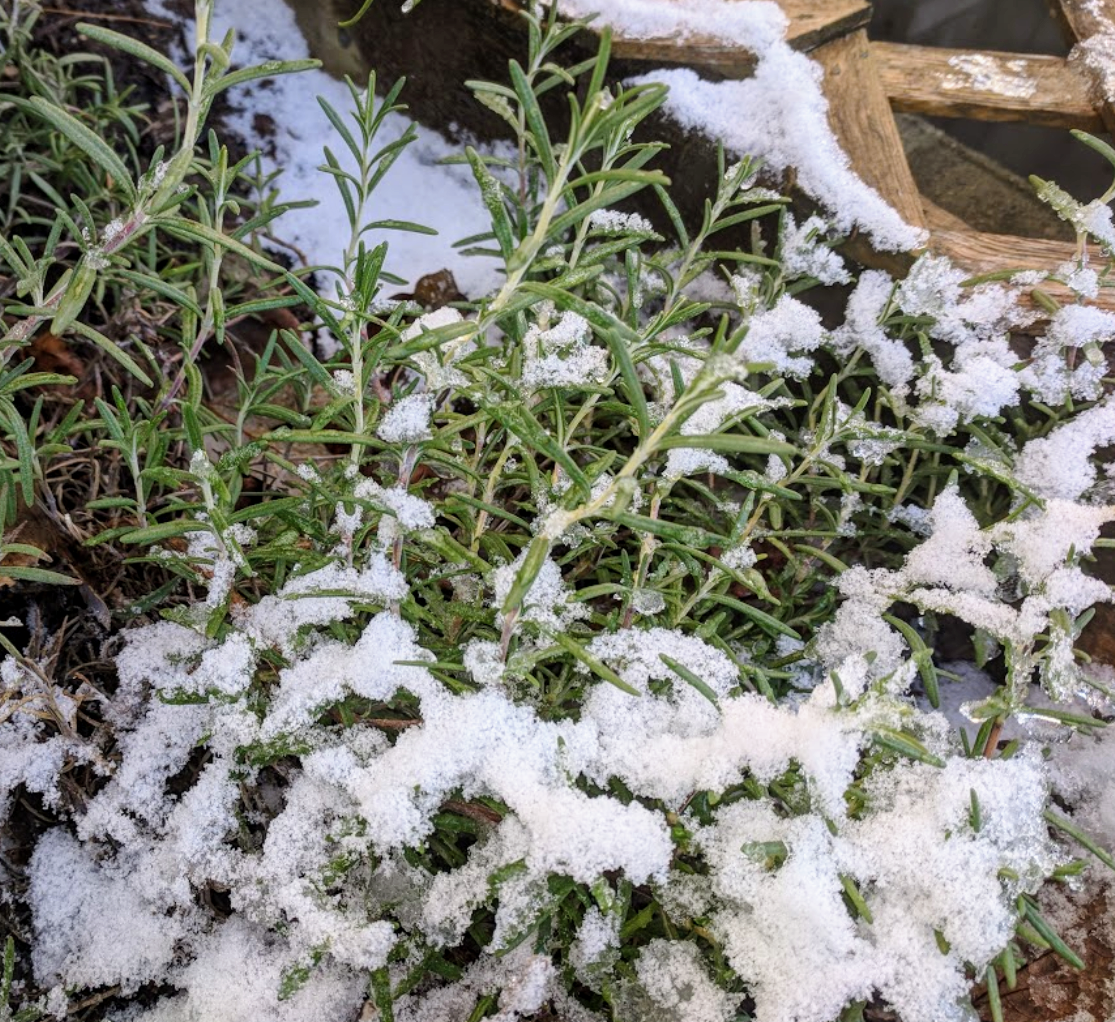
Rosemary is a popular herb. It is extremely aromatic, and is fabulous for cooking, or just for smelling! It's foliage is cooked into or on top of meats, fish, vegetables, soups.. It's flowers are crushed to make oil, and perdfumes. Rosemary is also used as a mini Christmas tree. It is sold at stores around Christmas time in a pyramid/Christmas tree shape. People can walk by and have a delightful holiday smell fill the room! Rosemary requires excelent drainage to survive. It willl survive areas with lots of rain, but is absolutly essential to have excellent drainage for it to thrive there in that rainy spot. Only water in the summer if potted, or in the desert in the ground. Otherwise, it should handle the summer heat. Rosemary needs full sun. It can take part shade, but won't perform its best. Rosemary is very finicky indoors. Winters (at least in Indiana) are very cloudy. Days on end can be cloudy here. Even in a full sun spot by the window, the Rosemary could die. Or even if you have sunny Winters an area not directly in a sunny window may die. Since it is cooler inside, it takes longer for traditional potting mix to dry, and any remaining moisture for more than a day or two will rot the plant. Make sure you water it only when the soil is completely gone dry, and is in the brightest window of your home. It can also be grown under grow lights as well. Rosemary is freeze tolerant to a certain degree. It is hardy between 15°F to 20°F. It will only briefly survive temps in the teens. There are cultivars that are hardy below 0°F. These cultivars include 'Arp', 'Alcalde', 'Madeline Hill', and 'Athens Blue Spire'. These varieites are hardy in USDA Zones: 6-11. They can survive zone 5 with protection from winter winds. I have had success growing 'Arp' Rosemary in my USDA Zone: 5b in Indianapolis. It survived temps into the negative single digits with minimal damage. However on January 31, 2019 the polar vortex brought temps to -13°F with strong winds over 30 mph. I had protected it with multiple layers of burlap, but got zapped by the cold anyways. I have a rooted cutting from that plant before it died. I am also ordering more 'Arp' Rosemary plants this Summer, and have a new plan for winter protection next winter. 🤞

Also really popular varieties are weeping. Several weeping varieties do exist, and are beautiful drooping over planters, or walls.

Where temps stay warmer than -10°F at all times, the cold hardy cultivars I mentioned above should succeed with minimal damage. If temps colder than -10°F are expected provide extreme protection by means of burlap, heat lamp, or a box or cold frame of somekind to protect from the wind. Or a much easier route will be to dig it up and bring it inside untill it warms up.

Good luck!

NatureMan


Sunday, March 24, 2019

Spring Window-Box Planter

I made a Window-Box planter with Spring annuals. It consists of Pansies, Dusty Millers, and Weeping Rosemary. All are freeze tolerant. Pansies are the most cold tolerant annual I know of. Pansies are cold hardy to 10°F. They will die back around 0°F, but they come back from the roots if that cold is very brief. Dusty Miller is hardy to 10°F. It may survive near 0°F, but will die back and may come back from the roots. Rosemary is hardy between 15°F to 20°F. While some cultivars are known to survive sub-zero °F, but Weeping Rosemary has the same hardiness as traditional Rosemary. Here in Indy the temp is not going to get any lower than 20°F till next Fall. My last frost will be in about a month or so. I hope this inspires you all to make your own awesome spring planters! 🌿🌷🌸🌼🏵️

Indianapolis, IN
USDA Zone: 5b


Monday, March 4, 2019

'Edith Bogue' Southern Magnolia Update: 3/4/19

This is an update post to my 'Edith Bogue' Southern Magnolia tree I planted last summer. Here in Indianapolis, Indiana in USDA Zone 5b the coldest temperature this winter has dipped to -13°F with winds howling at the time, winds at that coldest temp was taken at nearly 30-40 mph. (Note: only humans detect wind chill, not plants) The strong winds along with those cold temps burned one side of the tree facing the wind. While the other side not facing the wind had virtually no winter damage at all. As long as the temps in the winter do not get colder than -20°F the tree will survive and send new sprouts in the Spring. So on my tree, many leaves have burned or partially burned, but many are still unaffected as well. For anyone who has a Southern Magnolia in a northern climate, do not dig up or discard your tree if you see lots of brown on the tree before the next growing season. The new growth will form in the spring and push off all the dead foliage. Always wait until spring to determine if your tree is dead. There is a big 20' tall by 10' to 15' wide ish 'Edith Bogue' Southern Magnolia outside a local nursery here in Indianapolis. It has been in the ground for well over a decade. The tree there has experienced temps down to -25°F with winds blowing more than 30 mph during that time in the winter of 2014. Every single leaf on the tree burned. It most certainly looked dead. It wasn't dead though, just about every branch survived and sprouted leaves. The new sprouts pushed off all the dead leaves. By the end of the following summer, you wouldn't have even known it was damaged by the cold. It has done this at least a few other cold winters as well when temps dipped below -10°F.

Today is March 4. Indianapolis last night tied the record for the coldest temperature for this date. The record was set back in 1871. The low last night dipped down to 2°F. Sub-freezing highs and lows will continue until this weekend when highs are going to get into the mid 50s. Signs point to REAL Spring staying after this week. This month has literally been "March comes in like a Lion, and out like a Lamb."

NatureMan


Thursday, February 21, 2019

Shrubs that Grow in Shade

1. Boxwood

2. Inkberry Holly

3. Hemlock (dwarf c.v's include 'Jeddeloh' 'Cole's Prostrate')

4. Azalea/Rhododendron

5. Yew

6. Oakleaf Hydrangea

7. Burning Bush

8. Pieris

9. Virginia Sweetspire

10. Euonymus

11. Summersweet


These are the best shrubs to grow in shade that are all hardy to at least USDA Zone 5. Boxwood, Inkberry Holly, Yew, Rhododendron (not Azalea), Pieris, and Euonymus are all evergreen. The others are deciduous. Very few good landscaping shrubs can grow in full shade. The common question is "What can I grow in my shaded labdscape???" Now you have a few really good options! There may be a few more I didn't list, but these are about it. Leave a comment if I left any out that are hardy to at least zone 5.

Happy planting!

NatureMan 🌿

Thursday, February 14, 2019

Most Cold Hardy Palm Trees

1. Needle Palm
The most cold hardy Palm tree on Earth! Matures to 6' tall and wide'. Slow growth rate. Mature established specimens can withstand temps down to -10°F. Young specimens may die near zero if not protected. USDA Zones 6-11
          2. Sabal Minor Palmetto

This Palm shrub is hardy to around 0°F when mature and established. Matures to 8' tall and wide. One variety that may be almost as cold hardy as the Needle Palm is the "McCurtain" variety. It has been said to survive sub-zero temps with no winter damage. USDA Zones 7-11

         3. Saw Palmetto

Famous Palm known for it's medicinal uses. It has been known to treat, and some say cure prostate cancer. This shrub is hardy to around 0°F when mature and established. Matures to 6' tall and wide. It may be slightly less cold hardy than the Sabal Minor, but only by a few degrees. Most success in growing Saw Palmetto comes when temps do not dip below 5°F. Temps near or below 0°F can be fatal. USDA Zones 7-11

         4. Pindo Palm

The most cold hardy pinnate leaved Palm tree. Matures to 20' tall and wide. Hardy to 5°F. Temps in tbe single digits for any prolonged periods will kill this Palm though. USDA Zones 7-11

         5. Windmill Palm

This is the most cold hardy tree form next to Pindo Palm. The better thing about this Palm is that the Windmill Palm is much faster growing than the Pindo Palm. Matures to 30'-40' tall by 5'-10' wide. Hardy to 5°F with severe winter damage. Hardy to 10°F with little or no damage. USDA Zones 8-11 (warmer regions of Zone 7)

         6. Sabal Palmetto

This beautiful tree is the state tree of Florida and South Carolina. Matures to 25'-80' tall by 10'-20' wide. Hardy to 10°F with no damage whatsoever when established. Can withstand brief periods in the upper single digits for brief periods as well when established.  USDA Zones 8-11 (warmer regions of Zone 7)


Thursday, January 24, 2019

Cold Hardy Bamboo

Bamboo is famous for being a tropical plant in the jungles of China and Asian countries. You may have also heard Panda's eat Bamboo in Tropical China. While yes, these are true, there are other Bamboo plants that are not tropical and are more subtropical or warm temperate hardy plants. These grow in the mountains of China where it is still very warm in the summer, but winter's are much colder. These plants have adapted to temps below freezing, and even below zero. In this post I will only share the most cold hardy kinds. These being hardy to between -10 to -20 degrees Fahrenheit. They are broadleaf evergreen plants. While many will call them trees, they are actually grass. I won't go into the science on trees vs grass, but just know they are not trees. There are many articles online that explain the difference. These plants add a great tropical vibe to the landscape. Tall green plants outside in the brutal cold and snow makes you feel like you are in a warmer place.

The two most cold hardy genera of Bamboo are Fargesia and Phyllostachys.

Some popular species in these genera include Fargesia nitida, Fargesia sp. 'Rufa', Fargesia sp. 'Rufa' Green Panda, Phyllostachys nuda, Phyllostachys bissetii, Phyllostachys aureosulcata, Phyllostachys atrovaginata 'Incense Bamboo' just to name some of my favorites.

When temps are below zero, winds may burn the foliage. The cold wind dries the leaves, and they die. When it is -10 degrees and there is little to no wind the plants will be unharmed, but when there is dangerous wind that may cause severe winter burn on the foliage. Since these plants are very cold hardy, they usually send up new shoots in the Spring and will regrow rapidly the next summer. If you plant gets burned, wait until Spring to look for new growth at the base before considering removing your Bamboo plants.

I took this picture of a grove of Bamboo probably 20' or 30' or so tall in Bloomington, IN. Bloomington, IN is in USDA Zone 6a. Coldest average temperature is -5 to -10 degrees Fahrenheit. I am unaware of what genus or species it is, but is definitely one of the two genera I mentioned above. This photo was taken in January, 2019. The weather is forecasted to be below zero next week, I expect at least some winter burn to the foliage, but will likely re-shoot next Spring if there is any severe winter damage. I can see some dead stalks, most likely from winter damage from last year, or a few years back. The owner just didn't cut it down. At the time of taking these photos there hasn't been temps cold enough to cause winter damage. Coldest temp so far was right around zero with minimal wind. As I said earlier I expect cold the cold and strong winds next week to cause some or severe winter burn. They have very aggressive root systems, and almost always recover. I suspect in years past this grove may have completely died off to the ground, especially after the 2014 winter which was historically cold. Lows down to near -20 with strong winds. It fully recovered and spread quickly.

LINKS to learn more on cold hardy Bamboo:
http://www.bamboogarden.com/cold%20hardy%20bamboo.html

https://www.thespruce.com/growing-bamboos-in-cold-climates-2132863


Tuesday, January 22, 2019

Most Cold Hardy Holly Trees

I will list the most cold hardy Holly trees used for hedges or as screening, not the shrubs. All these are hardy to USDA Zone 5 (-20°F). There are many more Holly trees, but are hardy to Zones 6, or 7 at the coldest. Zone 5 people still have hope for that broadleaf evergreen tree hedging!

'Steed's' Japanese Holly

6'-10' tall by 5'-6' wide

Makes the perfect hedging tree, or simply placed in the garden or along your house. Looks like a boxwood than a Holly.

'Sky Pencil' Japanese Holly

8'-12' tall by 1'-2' wide

Very upright. Perfect for blocking unwanted areas like power boxes, or great for along front of buildings for design. Branches bend and get deformed or snapped in heavy snow. In areas prone lots of snow wrap your plant with twine or rope to prevent this. Resembles Boxwood than Holly.

'Castle Spire' Holly

8'-10' tall by 3'-4' wide

This is one of the only true Holly looking plants with the spikes in the foliage. It is one of the only varieties that reach tree size that is hardy to Zone 5. Other varieeties are hardy toto zones 6 or 7 for coldest. Great for hedges, or around a buildings for design.

American Holly

20'-60' tall by 15'-35' wide

Next to 'Castle Spire' one of the only tree hollies for Zone 5. Perfect for hedging or larger screenings.


Loblolly Pine The New Northern Pine

Loblolly Pine Pinus taeda The Loblolly Pine is widely known as the most common Pine tree in the South-Eastern United States. However, it is ...