Saturday, December 29, 2018

Alternatives to Blue Spruce

The Colorado Blue Spruce has susceptibility to needlecast in portions of the the U.S. It can be deadly to millions of tree planted in the landscape. You still want that blue frosted look, but can't plant the Blue Spruce. Here are some trees that make a great substitute!

Concolor Fir (White Fir)


'Blue Cloak' This variety has been cultivated to be smaller than the traditional version, and to have a more silvery blue color. 

Mature size: 25'-30' tall by 10'-15' wide

'Candicans' This variety is known to have the bluest of any White Fir. At a distance it may appear to be a Blue Spruce due to its deep blue color. Smaller than the traditional White Fir.

Mature size: 25'-30' tall by 15'-20' wide

USDA Growing Zones: 3-7


'Paul's Select' Norway Spruce


This variety of Norway Spruce is the only Norway Spruce to have Blue needles. A dwarf compared to the traditional Norway Spruce. 

Mature Size: 15'-20' tall by 5'-10' wide

USDA Growing Zones: 3-7


Blue Atlas Cedar

Has deep silver blue needles. Doesn't form the traditional pyramid Christmas tree shape. Varieties include weeping, dwarf, fastigiate, and the traditional one has outward growth to add a unique look to the landscape. It is less hardy than all the others listed and the Blue Spruce. 

Mature Size: 35'-50' tall by 25'-50' wide (traditional form)

USDA Growing Zones: 6-9 (can be successfully grown in Zone 5 in a sheltered area away from windy sites)

 'Boulevard' False Cypress 

Deep blue silvery foliage. Needles are bent and twisted, adds unique texture to the landscape. This is a dwarf tree/shrub. Matures to 10'-12' tall by 2'-4' wide.

USDA Growing Zones: 4-8


'Pacific Blue' Macedonian Pine

Outstanding blue Pine. Perhaps the bluest Pine tree out there! Soft long needles stay strong through strong winds, and winter cold.
Matures to 20' tall by 15' wide.

USDA Growing Zones: 4-7
   
                         'Candicans' White Fir


                         'Blue Cloak' White Fir


'Paul's Select' Norway Spruce


Blue Atlas Cedar


Boulevard False Cypress


Pacific Blue Macedonian Pine


Friday, December 28, 2018

Needle Palm Winter Protection

I wrapped my Needle Palm to protect it from the cold wind before the January subzero cold arrives. It has endured highs in the 20s, and coldest temp of 10°F. Still alive and well, with minimal damage. The Needle Palm is extremely cold hardy. It can withstand temps down to -10°F possibly colder for brief periods. The problem is that in Indiana it is cold for prolonged periods. Highs below freezing for days on end, and several nights possible of near or subzero temps with lots of wind. This can damage or kill the Palm. So I wrapped it in 3 layers of burlap, then doubled wrapped a tarp over that. I will probably uncover it come February once the coldest of winter has past.

Indianapolis, IN

USDA Zone: 5b/6a


NatureMan


                  Taken first week of December


Thursday, December 13, 2018

Most Cold Hardy Broadleaf Evergreen Shurbs

In this post I will show you the most cold hardy Broadleaf evergreen shrubs, all of which are hardy to USDA Zone 5. A couple varieties are hardy down to USDA Zone 4. There are several more species hardy to USDA Zone 6 or warmer. But for those who live in Zones 4-5, you can still grow these tropical like plants for your landscape!

1. 'Blue Princess' and 'Blue Prince' Holly

The Blue Princess is the female that produces the berries, but the male one ("Blue Prince") is needed to pollinate in order for the female to form the berries. Both of which are one of the most cold hardy Holly bushes available. They are hardy to -30°F (USDA Zone 4)

2. 'Honey Maid' Holly

For those wanting a variegated Holly, but the famous variegated English Holly is not hardy to your area. Worry no more! "Honey Maid" Holly is a great alternative! Hardy to USDA Zone 5 (-20°F). Have a "Blue Prince" nearby if you want berries on it come Christmas time.

3. Variegated English Boxwood

This outstanding plant is perfect for your landscape! With it's variegated leaves, it adds great contrast, and is for perfect Christmas decor! Hardy to USDA Zone 5 (-20°F)

4. Boxwood

All Boxwood's are hardy to at least USDA Zone 5 (-20°F). There are a few hardy to USDA Zone 4 (-30°F). I am not going to name all Boxwood's (since there are so many!). I will name some of the most popular. "Winter Gem" is a Boxwwod with a bigger thicker leaf than it's cousins. It forms a light bronze in the winter, but doesn't harm the plant. It is hardy to USDA Zone 4 (-30°F). The rest I will name are hardy to USDA Zone 5 (-20°F). "Green Mountain" Dee Runk" "Green Tower" "Sprinter" "Green Velvet" "Graham Blandy"

5. 'Sky Pencil' Holly

Sky Pencil Holly is a variety of Japanese Holly. Very similar to the "Graham Blandy" Boxwood. It has an upright growth, more so than the "Green Tower" and "Dee Runk" Boxwood. It is like a pencil growing straight up. Hardy to USDA Zone 5 (-20°F).

6. 'Steed's' Japanese Holly

This Japanese Holly is an upright growing. It has a good spread to it, so it's nothing like the 'Sky Pencil' Holly or 'Graham Blandy' Boxwood. It can be formed into the perfect Christmas tree shape, or great to form tall hedges. Hardy to USDA Zone 5 (-20°F)

7. 'Castle Spire' Holly

USDA Zone 5 (-20°F) is too cold to grow the popular tall growing Hollies like 'Oakleaf' or 'Nellie Steven's' Hollies. They grow to 10'+ to make a nice tall Broadleaf evergreen hedge, or dwarf broadleaf evergreen tree for the landscape. For those in USDA Zone 5 (-20°F) wanting to grow that kind of Holly, fret no more! The 'Castle Spire' Holly grow over 8' tall and a good spread to make the perfect hedge or dwarf tree

8. Inkberry Holly

This plant is a great alternative to boxwood, just like the Japanese Holly is. This is more cold hardy than most other Zone 5 Boxwoods. The Inkberry Holly has been known to withstand temperatures down to -30°F USDA Zone 4 for good periods of time. A North American and US native Boxwood alternative! It is native across a good chunk of the eastern US. There are several varieties available, some newer varieties offer a more compact look, instead of it's original kind that would get leggy over time.

                            'Blue Princess' Holly


'Castle Spire' Holly


'Sky Pencil' Holly


'Steed's' Japanese Holly


Popular Boxwood Shrubs in the Landscape


''Green Tower' Boxwood


'Dee Runk' Boxwood


Variegated English Boxwood


'Honey Maid' Holly


Inkberry Holly


Monday, December 10, 2018

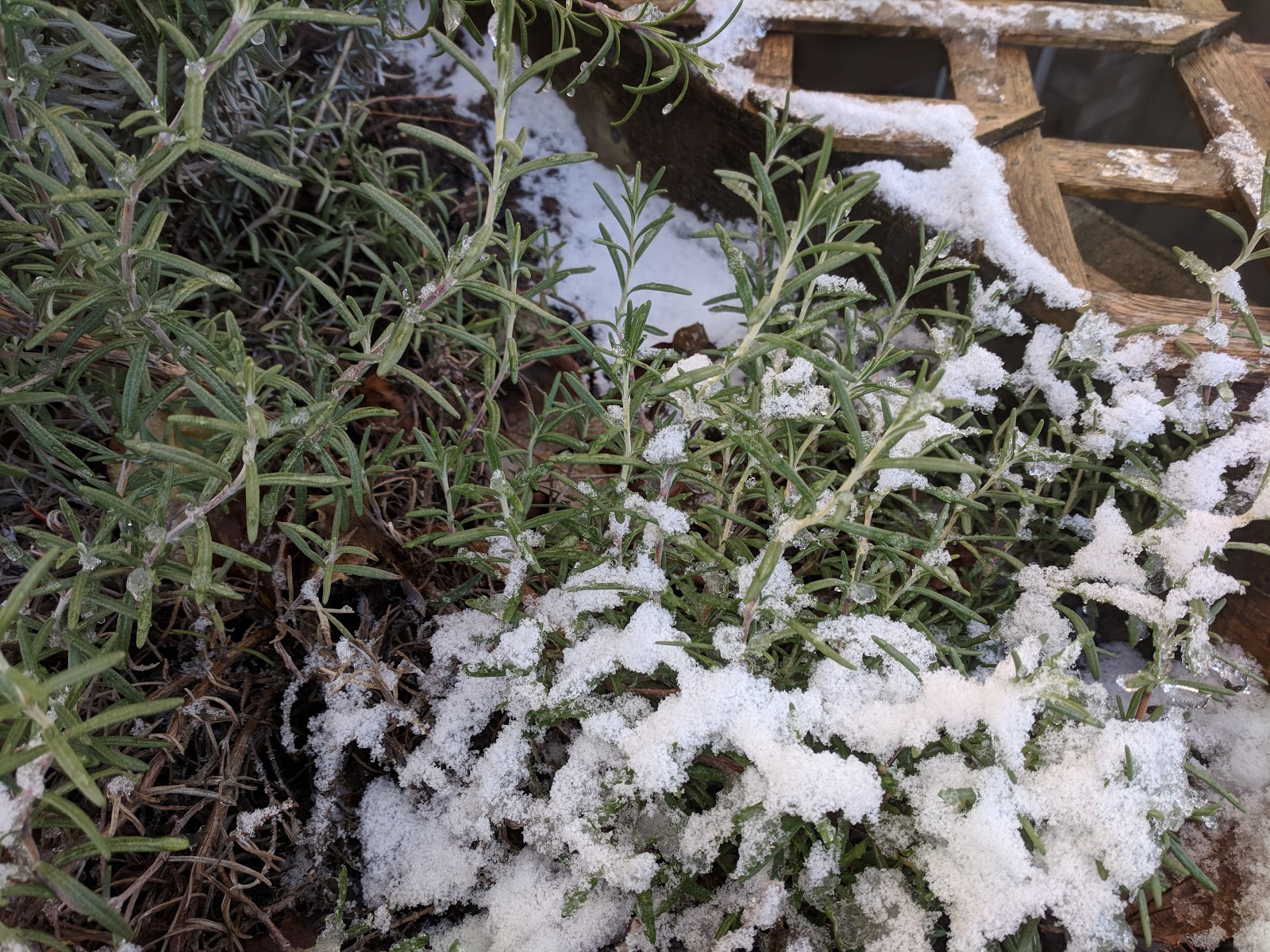
'Arp' Rosemary December 2018 Update

My 'Arp' Rosemary has survived temps down to 10°F so far this season. which is colder than traditional Rosemary can survive. Rosemary is hardy to about 20°F
 'Arp' Rosemary is the most cold hardy Rosemary. It is hardy to -10°F. I will update later this winter when I experience subzero temps
 So I don't risk killing it, I will cover it with burlap once temps get below freezing.

I planted this Rosemary back in the Spring. Look back at my earlier posts if you want to read that

Indianapolis, IN
USDA Zone: 5b/6a

NatureMan


Saturday, November 24, 2018

Christmas Tree Varieties (Northern Regions)

Christmas is the most wonderful time of the year! You can't beat getting that perfect Christmas tree, with that scent to fill your home! In this post I will be sharing the best Christmas tree varieties! I will not be sharing all of them, as there are several species grown in the south, also some grown out west, and southwest. I am not sharing. Most of these trees are grown up north in colder regions, where winter can get near or below zero (°F). When getting a Christmas tree it is really important to have it in water. Once the tree is cut, if the bottom is not trimmed within 2 hours it will calloused over, or basically heal over, and will not absorb any water. You only cut 1/2" off the base. It must be in water within. 2 hours, or it will need to be cut again. It should survive and retain it's needles for over a month, from Thanksgiving to New Year's.

1. Fraser Fir (Most Popular Christmas tree)

The most widly distributed Christmas tree in the market in the US. It is litterally the perfect tree. Best needle retention of any conifer, extremely soft, tiny, compacted needles, very full look, and perfect shape, extremely strong branches to hold the heaviest of ornaments. You could not get a better species for Christmas tree. 

2. Scotch Pine (Once was most popular, currently most popular Pine Christmas tree)

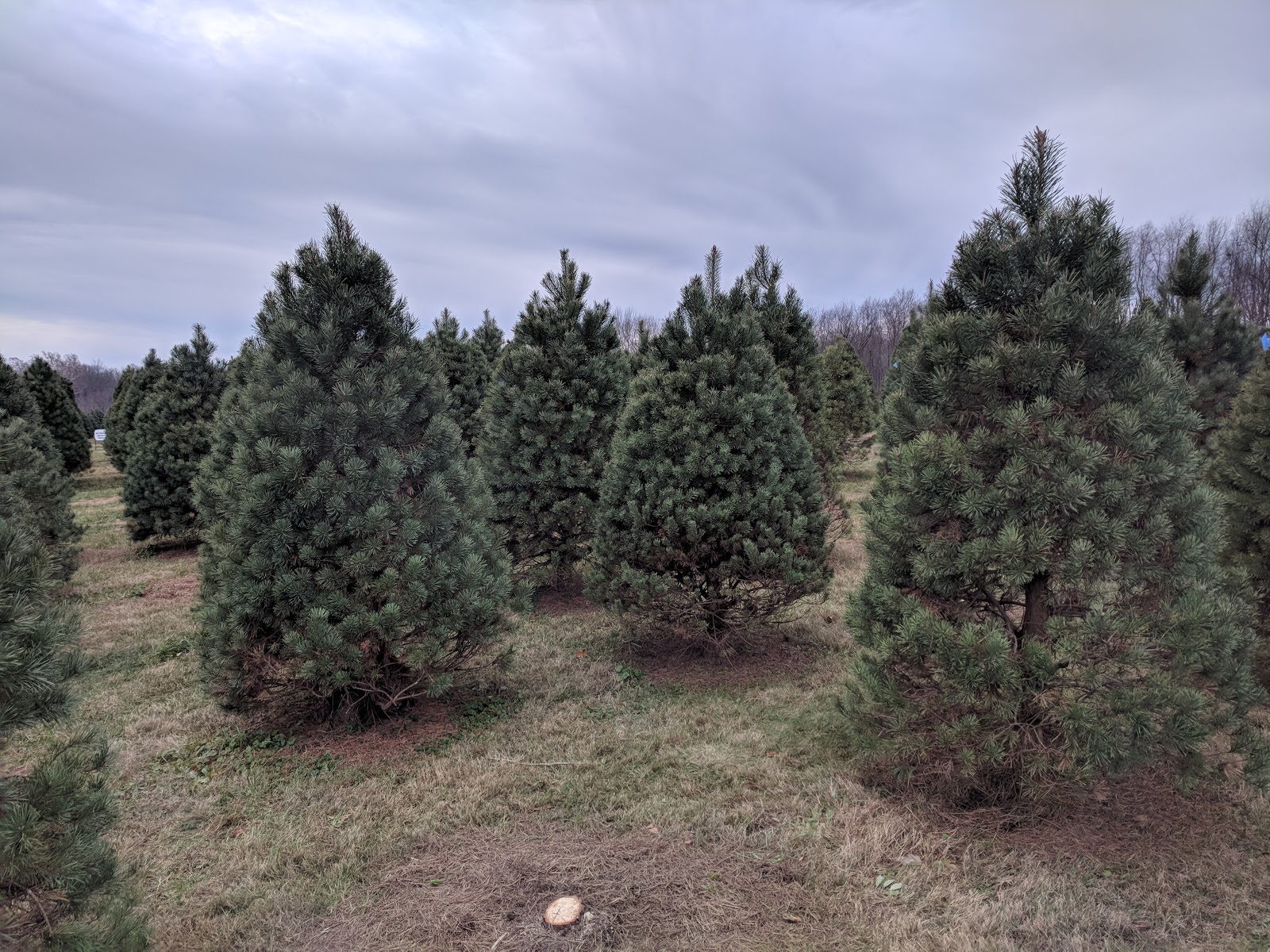
Scotch Pine once once the go to Christmas tree out of all others, but once the Fraser Fir came into the spotlight, it's popularity dropped. Before Fraser Fir, you could not get a better tree for neat short needles, with a very compacted look. Just because Fraser Fir is better, doesn't mean Scotch Pinr should be off you list as a potential winner this Christmas. I personally have been getting a Fraser Fir every year, and I need a mix up. I want something new and exciting. Scotch Pine is a true Pine, and looks more natural. If a tree like Fraser Fir is too perfect, it appears to be unnatural. In fact I got a Scotch Pine yesterday on Black Friday. I went to a tree farma and cut down a 6.5' tree. Scotch Pine has very strong branches to hold heavy ornaments, good needle rentention, short, compacted needles for a more neat look, but still looks open and certainly less compacted due to having longer Pine needles.

3. Eastern White Pine 

Eastern White Pine is a great Christmas tree. It has long needles to add the more natural Pine look. They almost feel artificial at the same time by being extremely soft to the touch. The only downside is the tree hase very weak branches. It can only hold light ornaments. For people who don't have heavy metal ornaments, this is the tree for you. Some people have cheap plastic ornaments, this tree is fine for that. Good needle retention.

4. Virginia Pine

While this tree is popular mostly in the south where it's native, it is very hardy far north of it's habitat to -30°F. It is very similar to Scotch Pine by having short compcated needles and branches. Good needle retention, strong branches.

5. White Fir

Lots of places don't use this tree, as it is relatively new tree to the Christmas tree market. It is increasingly growing in popularity. It has the long needles like a Pine, but is very soft. It looks nothing like the Fraser Fir, but since it's a Fir, it has extremely storng branches to hold the heaviest of ornaments, and fanatastic needle retention.

6. Canaan Fir (Fraser Fir (Balsam) variety) 

Nearly indistinguishable from Fraser Fir, with the same attributes of Fraser Fir. The reason why it's grown is because, in some places Fraser Fir doesn't grow as successfully, so some places grow Canaan Fir as a alternative. You won't regret getting this instead of your favorite Fraser Fir.

                           Indiana Tree Farm     


                                  Scotch Pine


                                   Scotch Pine


                                   Canaan Fir


Eastern White Pine


                                Virginia Pine


                                    White Fir


Monday, November 19, 2018

Tropical Plants Covered in Ice

My 'Edith Bogue' Southern Magnolia and Needle Palm got covered in an (unexpected) ice storm the other day. The NWS was predicting 1"-3" of snow with some sleet possible. In the middle of the storm at 1 in the morning the NWS changed the Winter Weather Advisory to an Ice Storm Warning. I was shocked when I saw the ice. Ice storms are not uncommon, but in the middle of November in Indiana is unheard of. It was very "cool" to see it on my cold hardy tropicals though! We got 0.25" of ice and no snow.

Tropical life in Indiana! Cowabunga dudes! 🌴❄️


NatureMan


Friday, November 16, 2018

Growing Coconut Palm's in Florida

Florida is NOT tropical. It is sub-tropical. All of Florida can see freezing or near freezing temperatures, even Miami. In fact every couple of years you can expect Miami Florida to see temps in the 30s with frost. It has even snowed once in Miami in January 1977. True tropical regions are areas where it never dips below 50°F. This would be places near the equator. Florida is far from the equator. Places like Brazil where the Amazon Rainforest is, and Indonesia are Tropical places because they have temperatures that rarely dip below 50°F, and are close to or at the equator. It is a world of a difference from Tallahassee to Miami. It can be 20°F in Tallahassee and 60°F in Miami. But every so often, temps below 40°F that brings frost/freeze threat reaches Miami. Many non-natives don't realize that in Miami its happen far more than  they think. In fact at least once every couple years, if not once per year, temps will dip into the 30s in Miami/south Florida. There are deciduous trees and Pine trees that go dormant in the winter from cold all the way down to the Florida Keys. Bald Cypress is a deciduous Conifer, that drops it's leaves in the winter, and is the dominant tree in the Everglades. The Red Maple a Maple tree growing from South Florida (like Miami) to southern Canada (like Toronto) in it's native range.

I just wanted to share that so you guys can understand why you can't Grow Coconut Palm trees in most of Florida. Only the southern areas have potential to grow it. The Coconut Palm has virtually no cold tolerance. Only tolerating temps to right above 32°F. It has been known to survive temps at the freezing point for brief periods of time with significant damage, but recovering. The coldest average temperature in Florida ranges from 15°F (Northern FloridaF to near 40°F at it's southern most tip (Keys). Miami, to the Everglades, down to the Keys are the best areas for growing the Coconut Palm. There is one exception, people have had success growing it north, only along the coast to near Tampa, and along the other coast to near Melbourne. But even there they may survive many years, but a rare but likely cold front where temps dip to the freezing point is bound to happen that will kill them. I was in Ana Maria Island (near Tampa) earlier last Spring, on the beach I saw a few Coconut Palm's. That is the absolute farthest north it can grow. I am sure in the past it has had some severe damage from the cold, but recovered. It will die in the coming years eventually, it is inevitable. But can survive quite a while, due to the coastal warm air. Tampa has dipped to the upper 20s in recent years, but places on the coast like Ana Maria Island stayed above freezing or warmer due to the breeze off the warm waters.

I have made some maps that give an idea where to grow Coconut Palms. The second map I circled the two areas along it's growing range, that simply shows you can grow it in those areas, but will need protection in the coldest of times, or it will probably die.

NatureMan

                                Found Online
 

                                     Found Online

         
 Found Online: Coconut Palm in St. Petersburg
 

Next three pictures are mine: Coconut Palm's in Ana Maria Island


Loblolly Pine The New Northern Pine

Loblolly Pine Pinus taeda The Loblolly Pine is widely known as the most common Pine tree in the South-Eastern United States. However, it is ...