Sunday, April 12, 2020

Types of Deciduous Trees in Florida


 (Red Maple Trees amongst Palm Trees)


It may surprise me you that there are a lot of deciduous trees grown and native to Florida. While most deciduous tree are only found in north Florida where freezes are present during Winter months, but quite a few are grown through Southern Florida as well mostly due to the fact that it gets "cool" in Winter and isn't optimal for growth so plants go into brief dormant state.

1. Red Maple (Acer rubrum)

Red Maple is recognized as the most widely distributed Deciduous tree in North America ranging from Southern Canada, to Minnesota, over to Maine, and all the way down to Southern Florida to the Everglades. Hardy in USDA Zones 3-10. Yes, this Maple tree can be grown in Toronto to Miami. The dormant state is extremely brief in South Florida, only a couple weeks. Leaves turn red around Christmas. Tree goes bare around the New Years, and gets flowers by the middle of January, then foliated by the end of January. There is a cultivar developed from wild trees in Florida better adapted to high heat and humidity with mild winter of Florida. This cultivar is called 'Florida Flame'. A tree grown in Michigan would die if it was brought to Florida, as the trees are adapted to the regions they grow in. Interestingly enough the Florida Flame variety has been known to grow into USDA Zone 5/6, but dies in zones 3-4 as it originates from much warmer Florida wild Red Maples


2. Bald Cypress (Taxodium distichum)

Bald Cypress also has a vast native range from Southern Indiana, to New York down to South Florida. It is the most famous tree growing straight in standing water in the Everglades. It is a Conifer related to Pine but drops it's needles in the fall. Hardy in USDA Zones 4-11. Bald Cypress unlike Red Maple has a longer dormancy, and won't regrow new foliage until nights are hot. Even if it's 80°F in February the nights are still chilly so the tree stays bare untill true Summer arrives (usually by early-mid March in Florida) when nights are constantly near or above 60°F. Landscaped all the way into Minnesota and Canada with no problems with the cold.


3. Crape Myrtle (Lagerstroemia spp.)

Native to Sub-Tropical regions in Asia, this tree is adored in the Southern states with it's show of flowers that cover the tree all summer long adding a tropical ambiance. Hardy in USDA Zones 7-10 (some varieties into zone 6). While this tree doesn't grow in Southern Florida, it is grown through parts of Center Florida. Crape Myrtles also foliate when temps get really warm consist


4. Sweetgum Liquidambar styraciflua)

Sweetgum has a vast native range from South Central Indiana to New York City down to North Central Florida. Beautiful Maple like leaves that turn not just one color but range from being yellow to orange to Red to all of the above.


5.  Pignut Hickory (Carya glabra)

Pignut Hickory has a vast native range expanding over much of the Eastern Half if the US. Native through Central Florida. Hardy in USDA Zones 4-9 and into 10a, but not further South. Pignuts provide essentially food for wildlife. Fast growing and makes an excellent shade tree!


This list could go on and on, but I listed my top 5. There are so many deciduous tree native and landscaped to Florida. Hope you all found it very useful! Stay safe y'all! 🌳


Some Sources:

1. https://plants.ces.ncsu.edu/plants/taxodium-distichum/
2.https://plants.ces.ncsu.edu/plants/lagerstroemia-indica/
3. https://plants.ces.ncsu.edu/plants/liquidambar-styraciflua/
4. https://www.chronicleonline.com/news/real_estate/fall-foliage-and-pruning-logic-in-florida/article_ef9cb6a2-b313-11e8-86f9-63b83b04260f.html
5. http://www.wildsouthflorida.com/red,maple.html#.XmMaoWlOkwA
6. https://blogs.ifas.ufl.edu/orangeco/2018/06/28/the-florida-flame-red-maple-makes-a-colorful-addition-to-the-landscape/

Tuesday, April 7, 2020

4 Best Palm Trees as Low Maintenance Houseplants

1. Lady Palm (Rhapis excelsa)

Extremely low maintenance. Grows in low light to high light. Allow soil to thoroughly dry between waterings. So watering is very minimal. This is a fan Palm that is usually bush like in nature. Always grown as a clump. Slow growing, but after many many years will grow up to 15' tall.

2. Pygmy Date Palm (Phoenix roebelenii)

Extremely low maintenance. Grows in low light to high light. Allow soil to thoroughly dry between waterings. Water is very minimal. Grows as a clump or a single trunk. This dwarf Palm only mature to 6'-8' tall.

3. Kentia Palm (Howea fosteriana)


Extremely low maintenance. Grows in low light to high light. Allow soil to thoroughly dry between waterings. Watering is very minimal. Usually grown as a clump, but can be attractive as a single stem. Extremely slow growing, but will eventually reach 60' outdoors, but likely stay less than 15' indoors after several decades. Unfortunately is very difficult to find in nurseries due to high demand and extremely slow propagation. Usually very expensive if you do find one, but I highly recommend getting it if you see one!

4. Parlour Palm (Chamaedorea elegans)

Extremely low maintenance. Grows in low to medium light. Foliage scorches in direct sunlight. Allow soil to dry between waterings, but let soil become bone dry, or stay dry. Always sold as clump, usually a small plant less than 2' in size most of the time several inches high. Resembles a small Fern due to compact dwarf size. May eventually reach 5' after many years. After 50 years of growth outdoors they can reach 10'-15'. Very common, and usually very cheap. Makes a perfect addition to your home or office!


 *Photos in order with numbered plants


Wednesday, March 18, 2020

Conifer Landscaping in Southern Florida

1. Sand Pine (Pinus clausa)

Sand Pine grows in sandy areas in Central, South Central, and parts of Southern Florida. Highly adapted to sandy rocky arid soils. Hardy in USDA Zones 8-10 (11). Short needles with compacted growth is preferred for landscaping and as a Christmas tree. Witches brooms are grafted onto the trunk of a regular Pine trunk for a topiary in landscaping.


2. Leyland Cypress (Cupressus × leylandii)

Leyland Cypress has soft foliage with compact growth. Hardy in USDA Zones 5-10. Very tolerant of humid summers and mild winters of the deep South. Very popular Christmas tree. Though may struggle in zone 10b, and too hot in zone 11.


3. Slash Pine (Pinus elliottii)

Slash Pine grows in most of the state of Florida excluding part of the Everglades and the swampy areas. It even grows into the Florida Keys. Southern variety (var. densa) is hardy in USDA Zones: 10-11 (northern variety in zones 7-9 (10))  Has very long needles that are 6"-12" long. When young appears to be a grass and not a tree. Produces huge pine cones that are 5"-8" long. Mostly planted in restoration sites, or planted for erosion control, though is becoming popular in urban landscaping as well.


4. Norfolk Island Pine (Araucaria heterophylla)

 Norfolk Island Pine is a tropical Conifer hardy to zone 10. Small not so sharp needles adds beauty to the landscape. Popular as a Houseplant as well. Can be grown as a focal point specimen or many as a screen. Very popular Christmas tree.


Friday, March 6, 2020

Sabal Palmetto

The Sabal Palmetto is one of the most cold hardy Palm trees in the world. Specimens have been known to survive down to 7°F for brief periods. It is the state tree of Florida and Southern Carolina. Grows Ina wide variety of soil types and locations. Grows on forest edges, under moderate forest cover, sandy sites near shores, and even occasionally on disturved poor sites. Sabal Palm is a very slow growing plant. In fact every tree planted in landscaping in the US are actually dug up from the wild in it's native range. It can take upwards of 20 or 30 years to have a 10' specimen for landscaping from seed. Since they grow near the ocean they are very tolerant of salt, even growing in standing salt water doesn't bother them. These trees are as tough as nails!


Sabal Palm
Sabal Palmetto
Sabal Palm is a lush tropical evergreen, and is the state tree of Florida and South Carolina. 
One of the most cold hardy Palm trees in the world down to around 7°F.
 Landscaped all the way up to Tennessee, Virginia, Maryland...

Hardiness: USDA Zones: 7b-11

Mature Size: 30'-50' tall by 5'-6' wide
 (Some very old wild specimens grow to 90' tall)

Light: Full sun-Part Shade

Water:  Dry-Moist
Grows best in moist well draining soils. Excellent drought tolerance once established.
 Tolerates wide moisture conditions from drought to moist soils.

Soils: Not particular with specific pH level. Grows in most soils. 

Deciduous/Evergreen:
Evergreen

Tuesday, February 18, 2020

Growing Loblolly Pine in Indiana (Pinus taeda)

Loblolly Pine is one of many Pine trees in the Southern Pine family native to the Southern US. Loblolly Pine is considered the most cold hardy of the Southern Pines. It is hardy to -10°F with reports of it surviving slightly colder with severe winter damage. Hardy in zones 6-9(10). Personally I have witnessed them as far north as Terre Haute, Bloomington, and Columbus Indiana. I live on the North side of Indianapolis and have never seen one in the city itself and points north, as it very well may be too cold. I have seen a few Loblolly Pines turn almost completely brown in Southern Indiana with polar outbreaks, but apparently the buds for the following season are unharmed and the tree survived. In Southern Indiana it virtually never gets below -10°F, but Indy North on very rare occasions does get down to -15°F to -20°F. January, 2014 was notable. -15°F in Indianapolis -20°F in Hamilton County (county just North of Indianapolis) -15°F to -20°F may kill even an established mature specimen. Bloomington Indiana for example reached -10°F at the coldest point likely damaging any Loblolly Pine, but mature speciemens may survive. If any Loblolly Pines were present north of Indianapolis they would have likely died from the cold in 2014. Another Polar Vortex occured last year in 2019, it didn't extend as far South as the 2014 outbreak though. It got to -10°F in Indy, -15°F in Hamilton County, and negative Single Digits over Southern Indiana, likely causing little to no harm on Loblolly Pines in Southern Indiana. Though I did notice Winter burn on Loblolly Pines while I was down near Columbus at the time.


With my observations and research Loblolly Pine should be fully hardy to temps between -5°F to -10°F with only some damage, and anything colder than -10°F may kill it if temps are not extremely brief or are heavily protected. If you are going to plant one in a zone 5, you must place it in a heavily protected spot from winter winds for best results. Michael A. Dirr has stated in his book Manual of Woody Landscape Plants that he has seen it as far North as Central Illinois, but it was barely surviving with regards to severe winter damage. Central Illinois is as Far North as Indianapolis. His observations correlate with mine. 🌲


Friday, February 14, 2020

Top 10 Trees Native to the US

1.

Giant Sequia (Sequoiadendron giganteum)
These wonderous trees are native to the mountainous areas in California (Sierra Nevada). They are the largest trees on Earth and one of the oldest living trees as well. They live to be thousands of years old and have a diameter of over 30', and reach over 200' tall! There are NO other trees like these on the planet! Hardy in zones 6-8.


2.

Sugar Pine (Pinus lambertiana) is a Pine tree native to Mountainous areas of California and Oregon. They produce the largest Pine Cones in the world. The largest Pine Cone came from this tree at a whopping 22.9" long! They are very popular in Holiday decor since they are so massive. In fact Sugar Pines are the largest growing Pine trees in the world. They can grow up to 200' tall. Hardy in zones 6-7.


3.

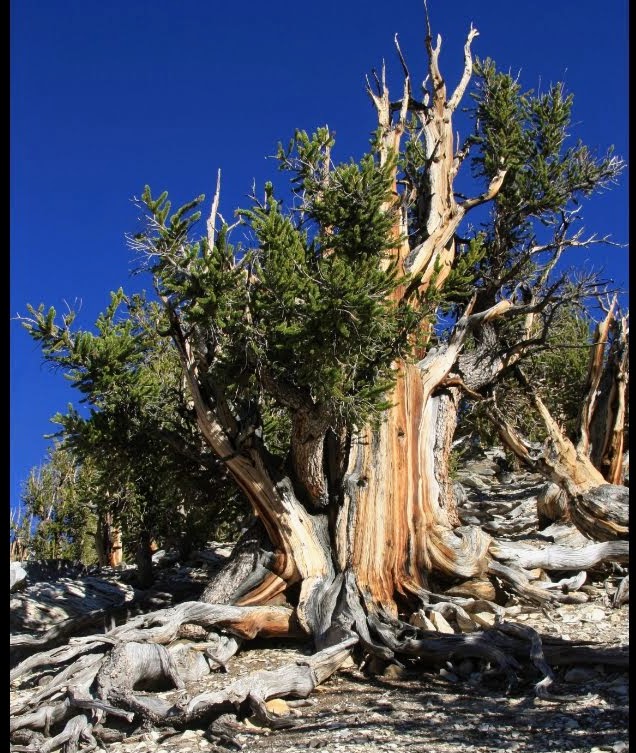
Bristlecone Pine

There are 3 species native to the Rocky Mountains and to the coastal mountains of California. All three species can live to be at least 3,000 years old making them one of the oldest single stemmed trees on Earth (not by means of cloning by sucker growth). The species that has a specimen that is over 5,000 years old it is Pinus longaeva. It is the oldest single stemmed tree on Earth. All these trees are hardy in zones 3-7. The botanical name of the other two species are Pinus aristata, and Pinus balfouriana.


4.

American Chestnut (Castanea dentata)


Known as the Sequoia of the East. It is the 2nd largest growing tree in the US next to the Sequia. These trees ranged from most of the Appalachian mountains. Chestnuts are amazing to eat and by many were considered the best tasting nut! The tree is now considered virtually extinct in the wild. Only few select specimens remain. A fungle blight from Chinese Chestnuts (resistant to the blight) brought to New York in 1904. To this day the blight thrives in Eastern US forests living on Oak trees that don't affect any other tree. The blight spread across the native range killing billions of trees, the tree was considered virtually extinct by 1950. The American Chestnut Foundation has spent over 30 years working to develop a blight resistant American Chestnut with many saplings from rare specimens found to work with. So far they have developed a few varieties that have high resistance to the blight, and planting began a few years back in several national forests. Essentially scientists took the blight resistant gene out of the Chinese Chestnut and placed it in the American Chestnut. The blight resistant American Chestnut is 100% the gentically the same, but with added resistance to the deadly blight. The resulting tree is 15/16 American Chestnut and 1/16 Chinese Chestnut. American chestnuts are extremely fast growing trees at nearly 3' per year. This picture to the right was taken in the 1800s by loggers of these once majestic trees that dominated much of the Eastern US. Hardy in zones 4-9.


5.

Bald Cypress (Taxodium distichum.)


Bald Cypress is a unique tree. It is a conifer (like a Pine) but is deciduous meaning it looses it's foliage every Fall. Also instead of growing in cold mountainous terrains like other conifers, in grows in swampy/wet areas in warm temperate to Sub-Tropical climates. It is native along the East coast up to Southern Indiana down all the way into Southern Florida in Everglades National Park. These tree can live for centuries, and the oldest specimens have been found at over 2,500 years old. They get massive bottom trunk with knees that are roots that pop up out of the ground. They are infamous for growing in standing water in true swamps. Even though they are native all the way down through Southern Florida they are hardy to -30°F. This is because they have a vast native range into part of the northern states. Hardy in zones 4-11.


6.

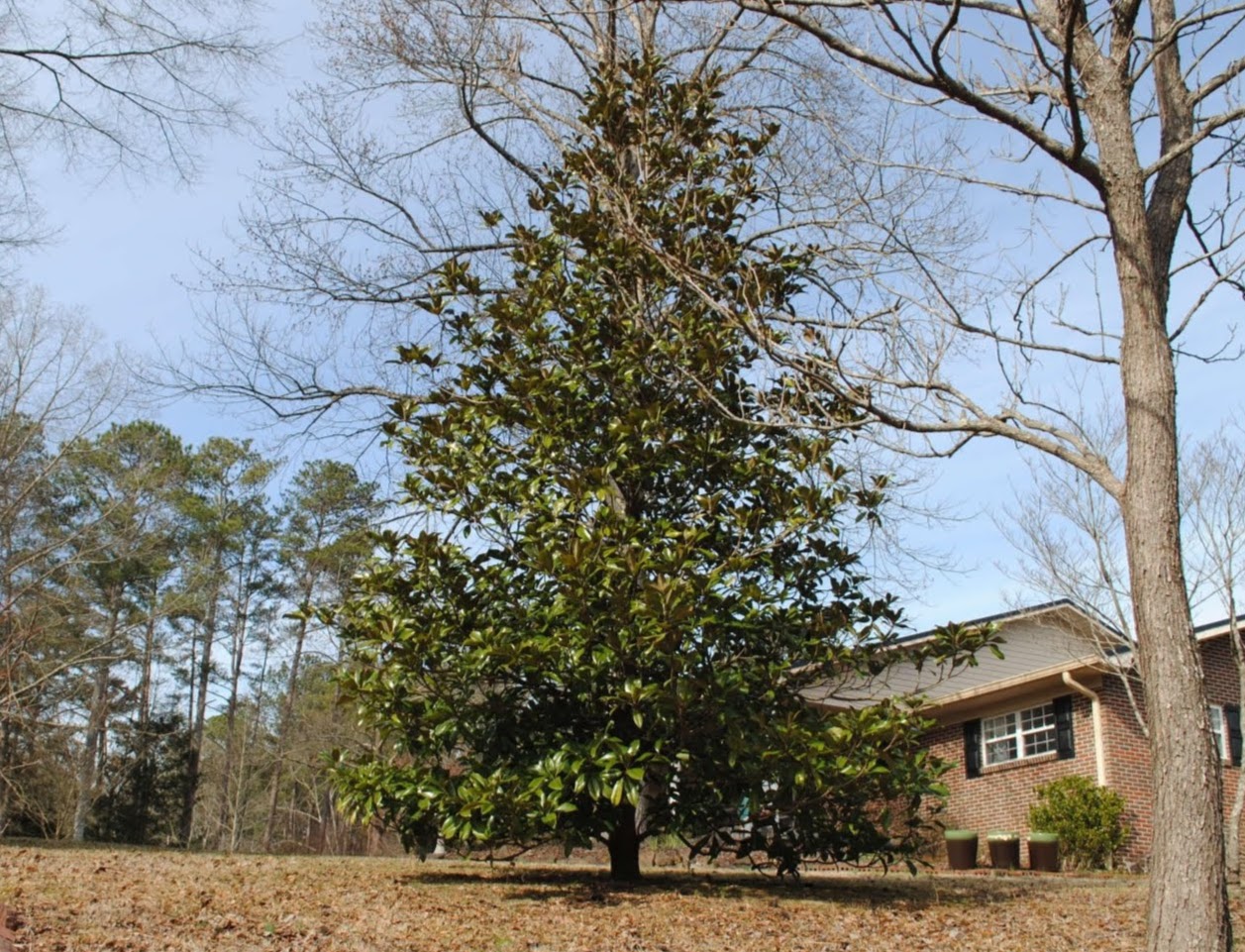
Southern Magnolia (Magnolia grandiflora)

 This tree is one of the most cold hardy broadleaf evergreen trees in the world. Huge leaves that can span over 6" long. The tree is hardy to -10°F, with some cultivars hardy to -20°F or slightly colder. Hardy in zones (5)6-10. It is native from Central Florida up through the coastal South up to North Carolina. Native through Southern half of Alabama, Mississippi, and Georgia. Also goes through part of Louisiana and Eastern Texas. It is landscaped all the way up into Canada, adding a tropical look to a frigid climate. They produce massive white flowers in late Spring and Early Summer that are considered by many to be the most fragrent flower in the world. Popular in purfumes, candles..


7.

Colorado Blue Spruce (Picea pungens)


  This is considered the bluest wild conifer in the world! While the blue color can vary form specimen to specimen, they are cultivated to be deep blue adding color to the landscape. There really is no other tree with this color in the world! Native to the Rocky Mountains primarily in Colorado, but in a few other states as well. It is landscaped all over the country. In recent years a disease called Rhizosphaera needlecast has limited planting in parts of the Eastern US. Hardy in zones 2-7.


8.

Quaking Aspen (Populus tremuloides)


Quaking Aspen is the most widespread tree in all of North America, ranging from most of the Rocky Mountains, parts of mountainous areas in Mexico, most of Canada, Alaska, most of the great lakes, and parts of Northeast and Midwest. Quaking Aspen is one of the oldest trees in the world by means of cloning (suckering). The tree sends sucker growth from the roots and the colonal growth can spread for miles. The oldest Grove is over 80,000 years old called "Pando" in Utah. It consists of thousands of what looks like individual trees, but are in fact one big tree growing on the same root system. They survive wildfires by sending thousands of suckers from the spring -midsummer every year. They grow in the coldest of climates and do not survive in areas with hot and humid summers with mild winters. They are hardy in USDA Zones 1-6. They have been known to survive temps colder than -70°F! Their attractive white bark, and "quaking or trembling" foliage in the slightest breeze makes this tree one of the most spectacular trees on this planet!


9.

American Holly (Ilex opaca)


American Holly is the most cold hardy broadleaf evergreen tree in the US, next to Southern Magnolia. Hardy to -20°F zones 5-9. Native from Central Florida through much of the East Coast up to Massachusetts, through all of the Appalachian mountains into Eastern Kentucky and Ohio. Also extends in the South to Eastern Texas. Absent elsewhere in the East and midwest. Landscaped across the country, though many places don't offer it due to the many pest and disease issues limiting its life. It's gorgeous red berries in winter with deep green leaves that persist into subzero winters truly is a sight you must see!


10. River Birch (Betula nigra)


 River Birch is a tree native in much of the South, and scattered in parts of the East and Midwest. Hardy in zones 4-9. The tree is most desired for its gray deep cinnamon peeling bark. In landscaping it is most commonly grown as a clump. Though single trunk is also very attractive in the landscape as well. In addition to the bark, the foliage turn bright yellow in fall. This tree in the wild grows in wet sites, and is intolerant of drought. This tree is a must when hiking, or landscaping!


Tuesday, February 4, 2020

Tree Plantations

No one can doubt that we need trees! Whether it's forests, landscaping, or cutting down for paper or biofuels. There are tree plantations so we don't have to cut down forests. Very few people know this, and it is unfortunately used very infrequently. Biofuels do pollute a release CO2 into the atmosphere, but are replenished by replanting. Trees may not grow fast enough to uptake the CO2 that was released for biofuels, this is why many plantation owners plant hybrid Poplar and Hybrid Willows. These are the fasteest growing trees on Earth, growing 6'-12' per year! They can be cut in as little as 2-3 years, or 5-8 years if you want really large trees/wood. More fuel than regular trees, and quickly fill back in what was cut down. Other slower growing trees such as regular Poplars, Maples, Oaks etc can take more than a decade before being cut. This is far too long and doesn't meet the demand for paper or biofuels. These regular trees release CO2 that isn't replenished by replanting due to slow growth. A single tree can be harvest for fuel in less than a day, but can take years to grow. This is why a tree that can be harvested in 2 years instead of 15 years is better for the environment. Willows and Hybrid Poplars have the same USDA Zones of 3-9. Very easy to propagate from cuttings for easy plantings. Very cheap, and very fast! They can even be grown for screening large open areas as well!

Biofuels from trees are made by usually 2 ways. 1. By fermenting the trees for liquid gas. 2. Burning the wood to boiling water that creates steam that powers a turbine engine for electricity. The 2nd option is actually called bimass.

•

•

•

Pictures below examples of Hybrid Poplar and Hybrid Willow Plantations used for Biofuels, selling as timber, mulch, paper products etc..


Friday, January 31, 2020

10 Rare Houseplants You HAVE TO GROW!!


1. Swiss Cheese Monstera
•
Somewhat rare (becoming more common) plant has small leaves compared to the famous Monstera delisiosa, and is a small plant that vines. Leaves look like Siwss Cheese with holes in them adding texture to your home or office! Low light, and low water needs. Basically the new Pothos!

2. Spike (Cordyline)
•
Commonly sold as centerpieces for flower pots and sold as annuals with flowers, this plant actually makes a perfect houseplant tolerating low light and low water. Variegated forms also exist adding color to your home or office!

3. Algerian Ivy
•
While becoming more common, still not available in every garden center. This beauty is mostly sold in variegated form. Huge leaves larger than English Ivy splotted with white adds color to your home or office! Tolerates low light to partial sun. Allow water to dry thoroughly in-between waterings.

4. 'Raven' ZZ
•
Brand new cultivar on the market, and may only be found on special orders or online. It is the same as the regular ZZ plant, but it's leaves are so dark they are almost black! This is a plant for everyone's home adding a darker vibe to your pale green home! 

5. Little Fiddle Fiddle Leaf Fig 'Bambino'
•
New to the market, though has been available for sometime, it is is just now becoming more widely available. Same as the regular Fiddle, but is a dwarf form with much smaller compacted foliage. Perfect for smaller spaces and not have to worry of it getting to big for your space.

6. Austral Gem Birds Nest Fern
•
Somewhat rare cultivar, and isn't available in most garden centers. Leaves feel like plastic and is much more tolerant to drier periods than the regular Birds Nest Fern. Perfect for your terrariums, or displays in your home or office!

7. Dancing Bones Cactus
•
Rare Catus is one of the only Cacti that thrives in low light! It's skeleton like growth is where the name comes from. Spooky!

8. Fish Bone Cactus
•
Rare vining Cactus that is one of the only Cacti that thrives in low light

9. Song of India Dracaena
•
Rare Dracaena is perhaps the most colorful Dracaena there is! Deep vibrant yellow variegated green foliage adds color and art to your home or office! Tends to suffer and drop leaves in low light, partial sun to bright indirect light is best. Low water needs.

10. Kentia Palm
•
This extremely rare and usually expensive Palm hails from Australia. It's extremely slow growth, few trees to collect seeds from, and a very high demand makes these trees very pricey, and the price to skyrocket especially for anything taller than 2'. It is totally worth it if you can get your hands on one! Like Parlour Palm, and Lady Palm, the Kentia Palm is one of the few Palms to thrive in indoor environments. Thrives in low light, low water, and low humidity. In the wild it can grow over 40', while indoors you likely won't live long enough to see it when it become too large.

Tuesday, January 21, 2020

NatureMan's Indiana USDA Zone Map

This map is based on my own experience living in Indiana, and to make it easier for your landscaping decisions. The real map by the USDA has a bunch of averages bunched together. In many places it can be hard to tell which zone you are in. You may be on the border of 2 different zones and be very difficult to tell. I made my map more simplified so you can clearly tell which zone you are in. Remember, these are based on average coldest temperatures. You very well can get colder than these, but very rarely. So if you are in a zone 6a then on average your coldest temperature is between -5°F to -10°F. In a very rare cold spell you can still dip to -15°F or -20°F, but would likely be record cold and only happening once every several decades, or maybe not at all. The winters of 1985, and 1994 comes to mind. Indiana saw zone 3 and 4 winters in a solid zone 6. Only got that cold in these two winters (colder than -20°F) in nearly 150 years of weather recording.


Tuesday, January 7, 2020

Trees and Shrubs to Grow in USDA Zone 2

Very few areas are in a zone 2, the only state in the US to be in zones 1 and 2 is Alaska. South Central Alaska in Anchorage is a Zone 4 because they are closer to the ocean. South East Alaska Juneau (capital) is a zone 7/8 because it is right on the ocean and is a maritime climate. Fairbanks is the only major city in the US that is a Zone 2. The city itself has over 30,000 people, but it's metro with several other towns and small cities has over 100,000. That is very large for Alaska since there is literally nothing else for hundreds of miles. There are however many other places around the world in a USDA Zone 2. Many areas in northern Europe, and Asia (northern Russia/Siberia) are in a Zone 2. Summers must be warm enough though for plants to grow sufficiently. In some places right near or in the Arctic that are usually a zone 1 but sometimes a zone 2 it doesn't get much above freezing in the Summer so even trees won't grow in these regions. In locations like Fairbanks You have several months that are frost free, and highs make it into the 60s-70s for several months. That is warm enough and long enough to grow trees as winters are cold to place it in a zone 2 (-50°F).


Trees 

(There are many cultivars for most of these trees, which includes dwarf shrub forms which are not listed under shrubs below)


 1. Blue Spruce (Picea pungens)

2. Engelmann Spruce (Picea engelmannii)

3. White Spruce (Picea glauca)

4. Black Spruce (Picea mariana)

5. Jack Pine (Pinus banksiana)

6. Scotch Pine (Pinus sylvestris)

7. Boxelder Maple (Acer negundo)

8. Amur Maple (Acer ginnala)

9. Chockcherry (Prunus virginiana)
Most popular variety is the Canada Red.

10. European White Birch (Betula pendula)

11. Paper Birch (Betula papyrifera)

12. Quaking Aspen (Populus tremuloides)

13. Balsam Poplar (Populus balsamifera)

14. White Willow (Salix alba)

15. Tamarack (larix laricina)

Shrubs

1. Red Twig Dogwood (Cornus sericea)

2. Mugo Pine (Pinus Mugo)

3. Ninebark (physocarpus opulifolius)

4. Common Juniper (Juniperus communis)

5. Bog Rosemary (Andromeda polifolia)


Loblolly Pine The New Northern Pine

Loblolly Pine Pinus taeda The Loblolly Pine is widely known as the most common Pine tree in the South-Eastern United States. However, it is ...